Protein is in almost everything now: pastries, oats, cereal, pancake mix. The demand is real. Gallup puts 11% of U.S. adults on a GLP-1 drug for weight loss as of June 2026, up from 3% in 2024, and people on these drugs eat less, so what they do eat has to count. But a protein claim on the front of a pack is not a strategy: alone it’s not a differentiator. The question is what the winners do with it.
MyBehaviorally's PackPower Score predicts a pack's overall sales performance. This piece zooms in on one pillar beneath it, Selected, the conversion pillar.
The packs that close the sale
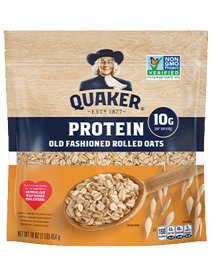
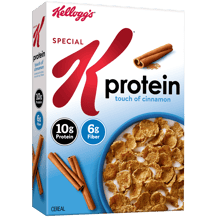
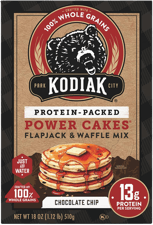
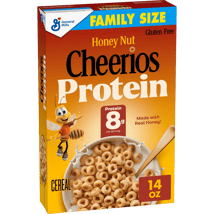
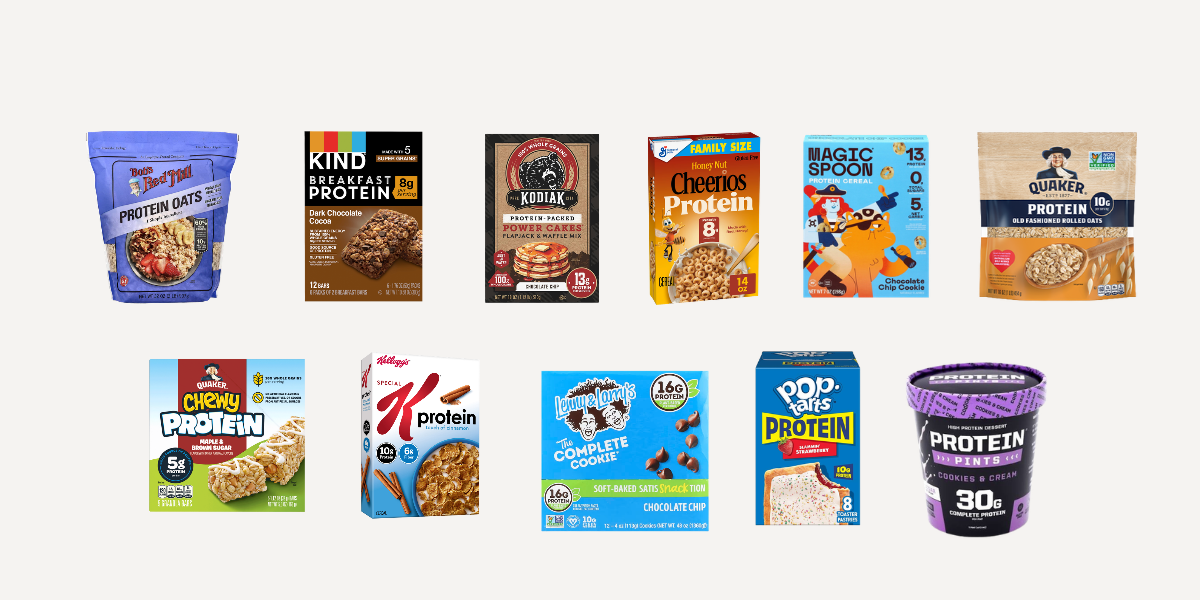
Four packs lead the breakfast field on Selected, the conversion pillar: Quaker Protein Oats (70), Special K Protein (69), Kodiak Power Cakes (61), and Cheerios Protein (59). Each treats the protein claim as part of who the product is, not as a feature bolted on. Quaker runs PROTEIN in the main band directly under the brand name. Special K builds protein into the logo itself, beside the red K. Kodiak carries a PROTEIN-PACKED ribbon above the product name, proven by one 13g circle. Pop-Tarts Protein, from the sweet-snacks field, runs the same playbook with a full-width PROTEIN banner proven by a single 10G badge.
1. Make protein part of the name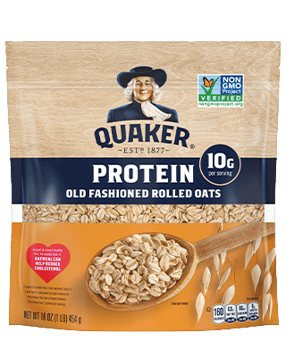
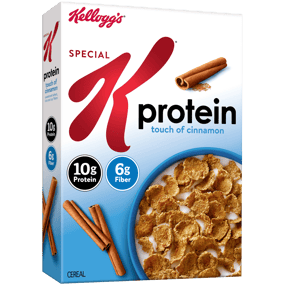
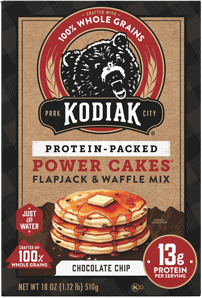
The pattern is clearest at the two ends of the Selected field. The packs that make protein the hero word, or build it into the name, lead: Quaker Protein Oats (70), Special K Protein (69), and Kodiak Power Cakes (61). The packs that bury the claim in a badge or in one stat among several sit at the bottom: Magic Spoon (48) and Bob's Red Mill (43). Attention does not explain the gap: the packs are noticed about equally on Seen. The difference is what the claim does once someone looks.
Quaker and Special K present protein as who the product is, not as a feature attached to it. That framing is the clearest divider between the top and bottom of the field. It is not a mechanical rule for every pack in between, but at the ends it is unmistakable: own the claim and the pack converts, dilute it and the pack slips.
2. Give the claim a lane of its own
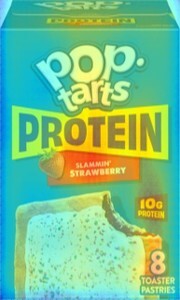
The winners do not whisper. Pop-Tarts runs its banner in navy on yellow against cobalt blue, and in the model's opacity map it reads clearer than the brand logo. Kodiak sets its ribbon in its own band above the product name. Both keep the brand calm and let the claim own the contrast.
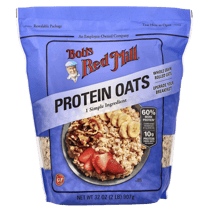
Bob's Red Mill shows the other side of the same move. PROTEIN OATS sits in the name, but on a pale ribbon in the pouch's own shade of blue, so the claim is there at low contrast. The pack posts the lowest Selected score in the breakfast field (43). Protein in the name is the start. Protein in a lane of its own is what gets it read.
3. Claim it once, prove it once, keep it next to the taste
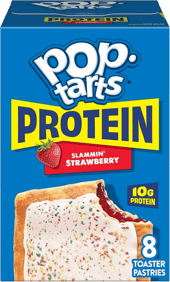
Pop-Tarts makes one claim and proves it once: the PROTEIN banner on one side, a single 10G badge on the other, in the same colors flipped. Attention travels cleanly between the two, and the hottest zone on the whole pack is where the banner meets the strawberry flavor flag, so protein and taste read as a single phrase rather than two competing messages. Kodiak runs the identical structure, a ribbon and one 13g circle, and keeps the pancake photo next to the claim so the benefit and the appetite cue arrive together.
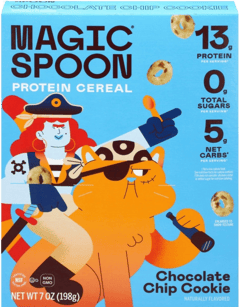
Magic Spoon shows what the single, well-placed claim avoids, and it shows it inside Selected itself. The two halves of the pillar come apart: the pack draws strong stated intent (Purchase Intent 80) but far weaker behavior at the shelf (Buying at Shelf 37). Protein is the first of three equal-weight stats crowded onto the front, so the pack earns interest but splits it across three numbers instead of pointing it at one. A claim that wins the stated half still has to win the behavioral half, and it converts when it is said once, proven once, and anchored to the reason someone wanted the food in the first place: the taste.
Three things to take away
Make protein part of the name. Give it a shape of its own directly beneath the master brand, or build it into the logo.
Give the claim its own high-contrast lane. Keep the brand calm and let the claim own the contrast.
Claim once, prove once, and keep it next to the taste. One headline, one quantified badge, one flavor cue beside them.
These three moves separated the packs that close the sale from the ones that only carry a claim, and it had nothing to do with grams of protein. They are about where the claim sits, how loudly it reads, and whether it arrives next to the taste. The packs that win are not the ones that say protein the most. They are the ones that make the claim easy to see, quick to believe, and tied to the reason someone reaches for the food.
The catch is that you cannot tell which side of that line your pack falls on. What reads clearly to a team that designed it can disappear on a crowded shelf, and the only way to know is to test it the way a shopper sees it. What reads clearly to a team that designed it can disappear on a crowded shelf, and the only way to know is to test it the way a shopper sees it. MyBehaviorally predicts how a pack performs before it ships, and again every time you change it, so a protein claim can be placed, proven, and positioned with evidence rather than instinct. Most brands find out what their pack is signaling after it is on shelf. It does not have to work that way. If you want to see how your pack performs before it reaches the shelf, get in touch.
Contact us today to learn more.